

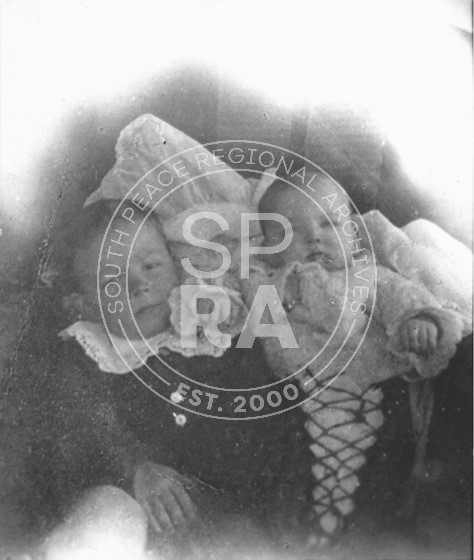
Image above: George and Eunice Holmes, children of Robert and Jessie Holmes, at St. Peter’s Mission on Lesser Slave Lake in 1904. Eunice is in a traditional Indigenous moss bag. 1904. (SPRA 0157.13)
Long before hospitals, clinics, and trained medical professionals became common in the South Peace, many families relied on the knowledge and dedication of local healers and midwives. Among the most respected of these was Veronique Calliou, a Métis woman whose compassion and skills made her an invaluable healthcare provider to the early women of the Grande Prairie area.
Born Veronique Gladue at Lac Ste. Anne in 1856, she grew up surrounded by the traditions and knowledge of her Métis community. Following the death of her first husband, Xavier Hamelin, Veronique married Adam Calliou in 1883. Together they established a farm at Flying Shot Lake, southwest of present-day Grande Prairie, where they raised their family and became well-known members of the community.
As settlement increased throughout the Peace Country, Veronique became recognized for her abilities as a midwife. At a time when professional medical care was often hundreds of kilometres away, she assisted mothers during childbirth, cared for the sick and injured, and shared knowledge that had been passed down through generations. Her services and insight were relied upon not only by Métis and Indigenous families but also by the growing number of settlers arriving in the region.
Providing this care was no small undertaking. Travel in the early Peace Country was often difficult and time-consuming, particularly during the winter months. Yet Veronique was known for making long journeys to assist women in need, carrying supplies and staying with mothers until they and their newborns were safely through the most critical days.
Through her dedication to caring for others, Veronique Calliou helped meet the healthcare needs of some of the South Peace’s earliest female residents. Her story is a reminder that long before formal healthcare systems existed in the region, women like Veronique provided comfort, knowledge, and lifesaving care to their communities.